


Denis McCarthy: Rebel with a cause
Statement of Denis McCarthy: Volunteer, E Company, 3rd Battalion, Cork No. 1 Brigade, Irish Republican Army
Denis McCarthy of Kilcrea, Ovens, Co. Cork, served as a Volunteer with the 3rd Battalion of Cork No. 1 Brigade during the Irish War of Independence and remained active through the Civil War period. His testimony, given in 1935 to the Advisory Committee, provides an insight into the dangerous and uncertain conditions faced by IRA Volunteers operating in the Cork countryside during one of the most turbulent periods in Irish history.
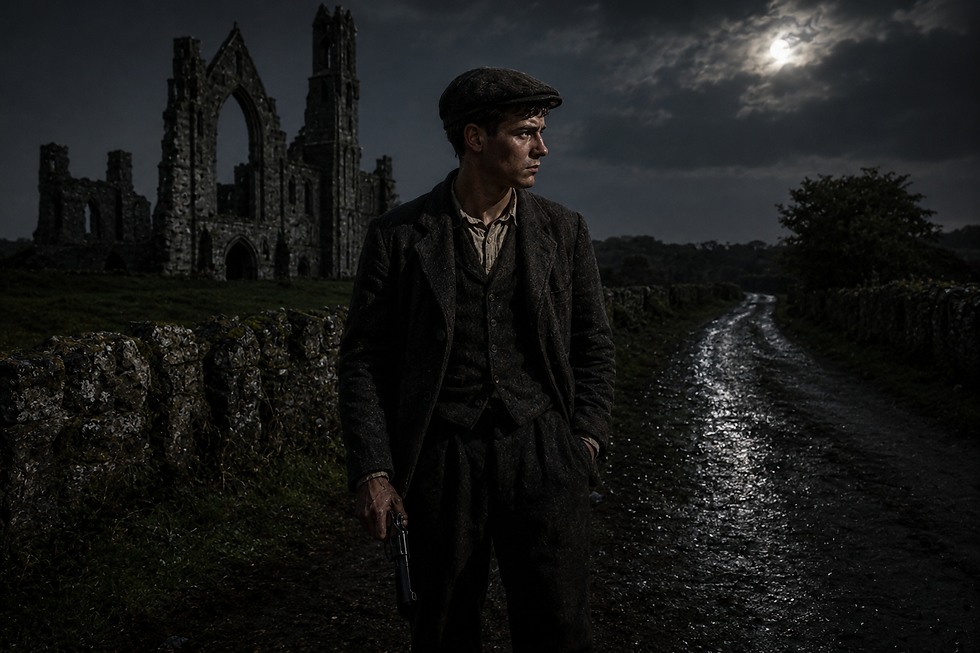
At the time Denis McCarthy was active, Co. Cork was regarded as one of the strongest centres of IRA activity in Ireland. Under leaders such as Tom Barry and Liam Lynch, Cork became the scene of frequent ambushes, barracks attacks, arms raids, and guerrilla warfare against Crown Forces, including the Royal Irish Constabulary, Auxiliaries, and British military units. Rural districts such as Ovens, Farran, Ballincollig, and Blarney formed part of an active operational area where Volunteers relied heavily on local support, safe houses, and intimate knowledge of the countryside.
McCarthy recalled that prior to 1920 he was engaged in what he described as “ordinary company routine raiding for arms,” a common activity among IRA units attempting to secure weapons in the early stages of the conflict. Arms were scarce, and Volunteers frequently depended on revolvers, shotguns, and captured rifles.
He stated that he took part in the attack on Farran Barracks, Co. Cork. During that operation, his duty was as a sentry stationed on the Kilcrea Abbey side of the road, less than a quarter of a mile from the barracks. He was armed with a Webley revolver and operated alone due to a shortage of manpower within the local unit. McCarthy explained that one of the attacks on Farran was connected with covering operations relating to an attack on Blarney Barracks.
He also participated in what he described as the “viaduct ambush,” where he was armed with a shotgun and was directly involved in the attacking party. Such ambushes formed the backbone of IRA guerrilla tactics in Cork, where Volunteers attempted to strike quickly before dispersing into the countryside.
One of the most serious incidents he referred to was the capture of three British soldiers near Ovens. According to McCarthy, word had been received that the soldiers were travelling from Ballincollig along the banks of the river. Around twenty IRA men took part in the operation. The soldiers were reportedly unarmed when intercepted. McCarthy stated that they refused to provide information and were subsequently shot. He confirmed that he was personally involved in the capture party.
Like many IRA Volunteers during this period, McCarthy spent considerable time “on the run,” avoiding arrest by moving between safe houses rather than remaining at home. Eventually, he was captured during a raid at approximately four o’clock in the morning while staying in another person’s house. He was charged with membership of the IRA but denied involvement and was released after approximately three weeks.
Following the Truce of July 1921, McCarthy entered IRA training camps and later went into Ballincollig Barracks when it was taken over by republican forces after the British withdrawal. He remained stationed there until the barracks were later burned as part of the anti-Treaty campaign.
During the Civil War, McCarthy continued his involvement with the republican side. He stated that approximately twenty to forty men took part in the operations he mentioned, including outpost duties and fighting engagements. On 24 November 1922, he and three others were captured while in possession of a rifle, revolver, and machine gun. No resistance was offered at the time of capture.
McCarthy was imprisoned until approximately August 1923, spending around nine months in custody. He stated that he did not sign the required declaration for release but instead escaped from custody. Following his escape, he remained on the run while also suffering from illness for several months. Because of the continued danger of recapture, even medical treatment had to be arranged secretly, with meetings taking place in varying locations.
Throughout the revolutionary period, Denis McCarthy remained an active Volunteer. In 1922 he was appointed Battalion Transport Officer within the IRA structure. By 1935, he had applied for a disability pension arising from his service, although no decision had yet been reached at the time of his testimony.
The experiences described by Denis McCarthy reflect the harsh realities faced by ordinary Volunteers in Co.Cork during Ireland’s struggle for independence and the subsequent Civil War. His account illustrates the constant danger, secrecy, imprisonment, and uncertainty endured by men operating in rural IRA units during those years.


Great research well done.
A lovely insight into that time in Irish history
Great piece of research.
Brilliant read👍